Kaitlyn Lasswell
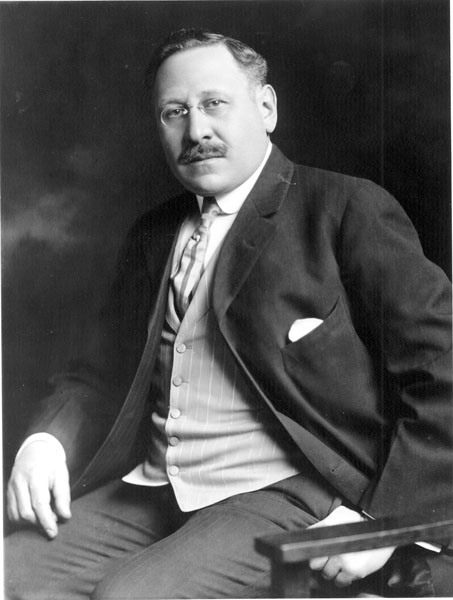

Pictured on Left: Julius Rosenwald (1912). Pictured on Right: Julius Rosenwald with his wife, Augusta Nusbaum Rosenwald (1926)
A Businessman Before a Philanthropist
When Julius Rosenwald’s name appears in history books, it’s usually connected to the thousands of schools that helped educate African American children throughout the South; that legacy alone would make him a significant figure in American history. However, focusing only on the Rosenwald Schools overlooks the experience that made those schools possible. Before he became one of the nation’s most well-known philanthropists, Rosenwald was an entrepreneur who helped transform Sears, Roebuck & Company into the largest mail-order retailer in the world. David Dalin describes Rosenwald as both “a true pioneer of modern business” and “a trailblazer in the field of philanthropy” and argues that he devoted as much energy to giving away his wealth as he spent acquiring it.¹
This blog explores how Rosenwald’s experience as a business leader influenced his philosophy of philanthropy. Examining contemporary newspaper accounts, Rosenwald’s own correspondence, and modern scholarship reveals that his greatest contribution was not just his generosity but the entrepreneurial principles he used to address educational inequality during the early twentieth century.
Following the Evidence
To better understand Julius Rosenwald, it’s important to look at both the historical record of his life and the ways historians have interpreted his legacy since his death. This requires looking beyond just his personal letters and newspaper articles to later historical scholarship.
Primary sources for this study include Rosenwald’s personal and business correspondence and contemporary newspaper coverage from The New York Times, along with other documents created during his lifetime. These help explain how his career and philanthropy were viewed by the public during his lifetime. A 1916 New York Times article detailed Rosenwald’s financial support for the Manassas Industrial School, which shows that his commitment to educational philanthropy had already started to gain national attention.² His letters preserved in the Charles L. Hutchinson Papers collection also offer insight into his relationships and the decisions that shaped his work.³
Secondary sources for this blog provide the historical context needed to examine Rosenwald’s broader significance and continuing legacy. Peter Ascoli’s biography follows Rosenwald’s rise from working in the clothing industry to his successful leadership of Sears; Ascoli explains how Rosenwald’s approach to organization and his ethical business practices set him apart from many other business leaders of the time.⁴ David Dalin builds upon this same idea by discussing Rosenwald’s philosophy of philanthropy and emphasizing his belief that charitable giving should promote independence and responsibility instead of dependency.⁵ When read together, these sources explain how Rosenwald’s success in business influenced the philanthropic vision he held that ended up making a lasting impact on American education during the early twentieth century.
When Business Principles Changed Education
By the time Julius Rosenwald became president of Sears, Roebuck & Company in 1908, the United States was in a period of great economic growth. Railroads were expanding, industrial production was increasing, and mail-order retailers were able to connect businesses with customers in completely new ways. Sears quickly became one of the nation’s most successful retailers, and Peter Ascoli explains that the continued success of the company depended not just on Richard Sears’s knack for sales but also on Rosenwald’s ability to organize and manage the expanding business.⁶
Unlike many other business leaders of his time, Rosenwald believed that long-term success depended on gaining the trust of the public. Ascoli explains that Rosenwald felt it was important to create honest advertising and offer dependable merchandise; he also believed it was necessary to focus on careful management instead of just pursuing short-term profits. During his leadership, Sears established one of the nation’s first product-testing laboratories to make sure the quality of the goods it sold lived up to the standards that customers expected and deserved. This business philosophy reflected Rosenwald’s conviction that ethical business practices strengthened the company and its reputation.⁷
These same principles also shaped Rosenwald’s approach to giving back to communities in need. After developing a friendship with Booker T. Washington, he became convinced of the power of a good education and believed it offered the best chance for lasting social and economic improvement in the lives of those in minority and impoverished communities. Instead of just throwing money into schools, Rosenwald expected the communities he intended to help to contribute some of their own money and labor before he would provide financial assistance. David Dalin believes that this matching-grant approach reflected Rosenwald’s belief that philanthropy should encourage initiative and shared responsibility instead of just dependence.⁸
Newspaper coverage from the time shows that Rosenwald’s work was already attracting national attention during his lifetime. In 1916, The New York Times reported his contribution to the Manassas Industrial School and highlighted both his generosity and his growing reputation as a philanthropist who was committed to offering educational opportunities.⁹ Rosenwald’s own correspondence similarly reveals that he viewed philanthropy not as an isolated act of charity but as a collaborative effort with the communities in need.¹⁰
Though his gift for business leadership is indisputable, one of Rosenwald’s most important contributions was applying the principles of his business to his charity work. His matching-grant model encouraged communities to invest alongside him rather than remain passive recipients of his charity. Rosenwald was unique in his approach to philanthropy, and his background in business allowed him to look at giving in a different way. The principles that helped transform Sears into one of America’s largest and most successful retailers, especially efficiency and accountability, also became the foundation for one of the most influential and impactful educational initiatives of the early twentieth century.
Why Rosenwald Still Matters
Julius Rosenwald’s life demonstrates that successful entrepreneurship has the potential to extend beyond the business world and can make a lasting impact on communities in need. Examining both primary sources and modern historical scholarship reveals that Rosenwald’s greatest legacy wasn’t only found in his great wealth but also in the unique and thoughtful way he used business principles to create and foster educational opportunities for communities in need.
- David G. Dalin, “What Julius Rosenwald Knew,” Commentary 105, no. 4 (April 1998): 36–43.
- “Gives $1,000 for Negroes: Julius Rosenwald Aids Manassas Industrial School,” New York Times, April 18, 1916.
- Julius Rosenwald, correspondence to Charles L. Hutchinson, May 20, 1911–April 8, 1921, Charles L. Hutchinson Papers, Series 1: Correspondence, 1875–1934, Newberry Library.
- Peter M. Ascoli, Julius Rosenwald: The Man Who Built Sears, Roebuck and Advanced the Cause of Black Education in the American South (Bloomington: Indiana University Press, 2006).
- Dalin, “What Julius Rosenwald Knew,” 36–43.
- Peter M. Ascoli, Julius Rosenwald: The Man Who Built Sears, Roebuck and Advanced the Cause of Black Education in the American South (Bloomington: Indiana University Press, 2006), chapter “Early Sears Years, 1895–1908.”
- Ascoli, Julius Rosenwald, chapter “Blacks, Politics, and Philanthropy, 1908–1912.”
- David G. Dalin, “What Julius Rosenwald Knew,” Commentary 105, no. 4 (April 1998).
- “Gives $1,000 for Negroes: Julius Rosenwald Aids Manassas Industrial School,” New York Times, April 18, 1916.
- Julius Rosenwald, correspondence to Charles L. Hutchinson, May 20, 1911–April 8, 1921, Charles L. Hutchinson Papers, Series 1: Correspondence, 1875–1934, Newberry Library.